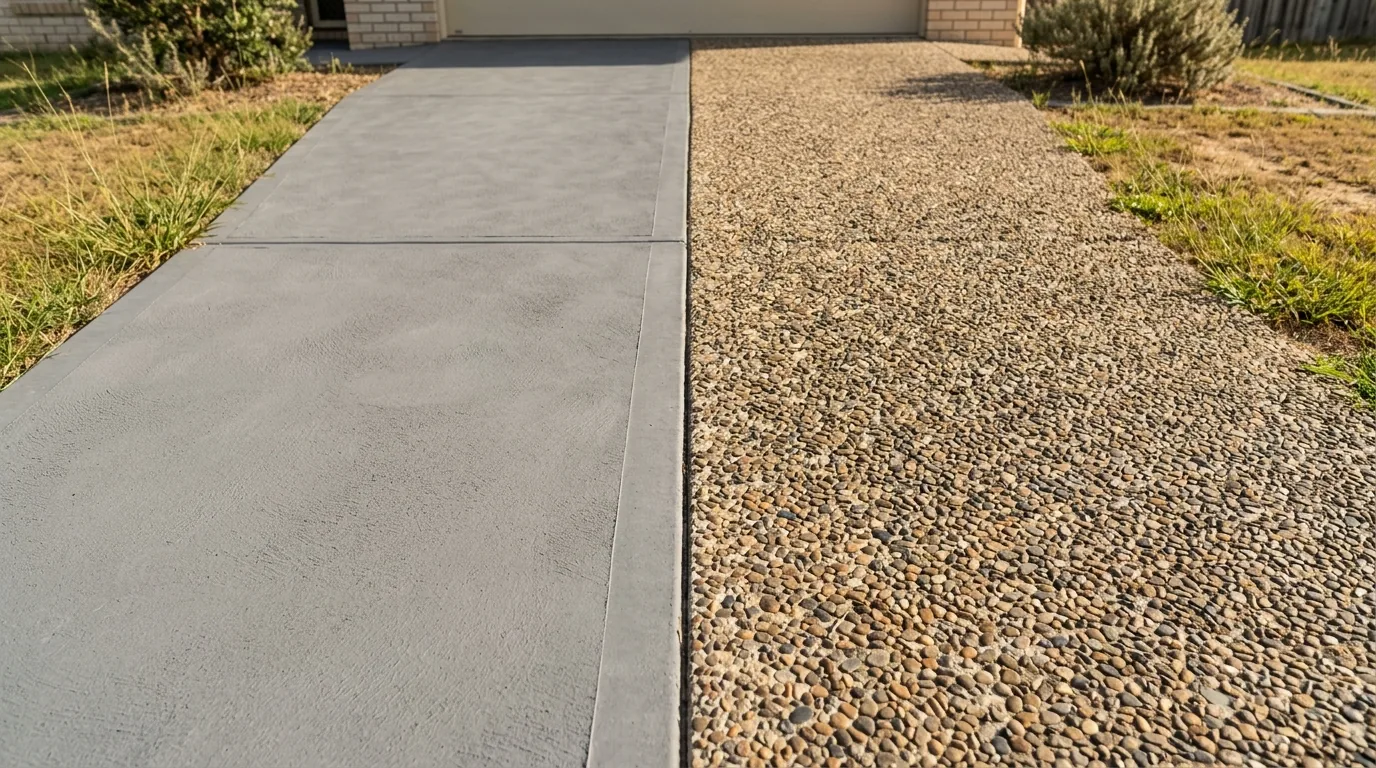
If you’ve decided you want a decorative concrete driveway or patio rather than plain grey, the next fork in the road is usually exposed aggregate vs stamped concrete. Both look fantastic, both are far more durable than pavers, and both are popular choices across Rockhampton and the Capricorn Coast. But they behave differently — especially in our climate — so it’s worth understanding the trade-offs before you choose.
Here’s how the two decorative finishes compare on the things that actually matter.
The quick version
- Exposed aggregate exposes the natural stone within the concrete for a textured, pebbly finish. Naturally non-slip, extremely durable, hides marks well.
- Stamped (and stencil) concrete presses a pattern into fresh concrete to mimic pavers, slate, timber or stone. Huge design range, smoother surface, more upkeep.
Both are excellent. The right pick depends on where it’s going and what you value.
Looks and design flexibility
Stamped concrete wins on variety. Because it’s patterned and coloured, it can convincingly imitate cobblestone, slate, brick, flagstone, even timber decking — and you can match it to a home’s style. If you want a specific look, stamping gives you the most options.
Exposed aggregate has a more natural, understated look — the character comes from the stone blend you choose (river pebble, granite, quartz and more). It’s less “designed” and more organic, and it suits CQ homes beautifully. Many people prefer that timeless finish that never looks dated.
Grip and safety
Exposed aggregate wins here, which matters a lot in a wet-season climate and around pools. The exposed stone gives a naturally textured, non-slip surface even when wet. It’s our go-to recommendation for pool surrounds and sloped driveways for exactly this reason.
Stamped concrete is smoother, and while a non-slip additive can be put in the sealer, it’s inherently more slippery when wet than exposed aggregate. Something to weigh for pool areas and shaded, damp spots.
Maintenance
Exposed aggregate is lower maintenance day to day. Its texture hides dirt, marks and minor imperfections, and it needs resealing every few years like any outdoor concrete here.
Stamped concrete looks its best when the sealer is fresh, and because the “grout lines” and texture are decorative, it tends to need resealing a bit more often to keep the colour and pattern crisp — especially under our UV. It also shows wear in high-traffic tyre tracks more visibly.
How they handle the CQ climate
Both handle heat, UV and the wet season well when sealed and maintained — see our tropical-climate maintenance guide. The practical difference:
- Exposed aggregate shrugs off our conditions with the least fuss — non-slip when wet, hides marks, copes with heat.
- Stamped concrete performs well but rewards more attentive resealing to protect the colour and pattern from fading.
Cost
Both sit above plain concrete and below natural stone or quality pavers. Cost depends far more on size, site prep, access and the specific finish than on which of the two you pick — they’re broadly comparable. For real numbers on the aggregate side, see our exposed aggregate driveway cost guide. The only way to get an accurate figure for either is to have the site measured up.
So which should you choose?
| If you want… | Go with |
|---|---|
| A specific paver/slate/timber look | Stamped |
| Maximum grip (pools, slopes, wet areas) | Exposed aggregate |
| Lowest ongoing maintenance | Exposed aggregate |
| The widest design and colour range | Stamped |
| A natural, timeless finish | Exposed aggregate |
For most Rockhampton driveways and pool surrounds, exposed aggregate is the practical, low-fuss favourite — it’s why it’s the most popular decorative finish in CQ. Stamped concrete comes into its own when you’re chasing a particular designed look and are happy to keep the sealer fresh.
Still weighing it up? We install both and we’ll give you a straight recommendation for your site. See our exposed aggregate and stamped & stencil concrete pages, or get a free quote and we’ll help you choose.