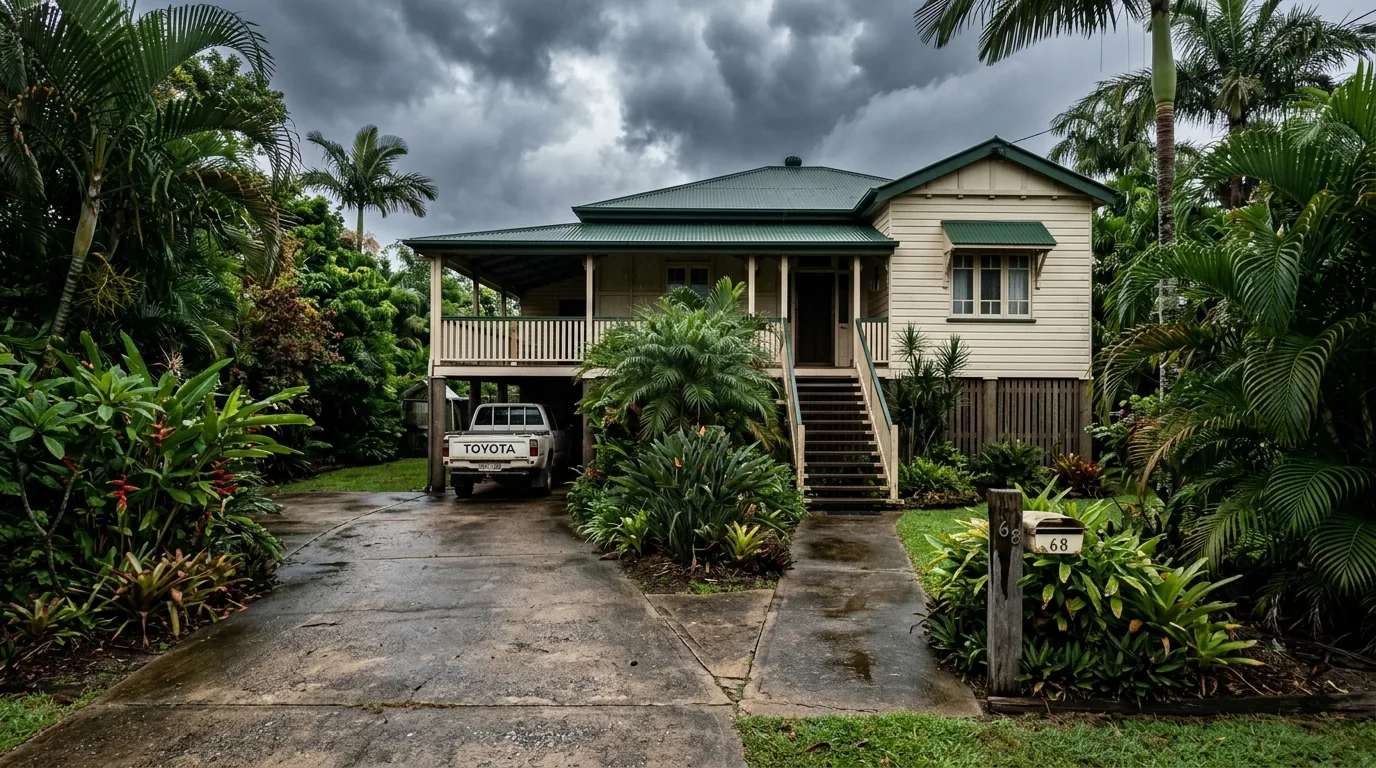
Concrete is built to last — but Central Queensland gives it a tougher run than almost anywhere else in the country. Months of intense UV, high humidity, the annual wet-season deluge and big day-to-night temperature swings all work on a slab in ways that a homeowner in cooler southern states never has to think about.
The result? Concrete that’s looked after properly here will easily last 30–40 years and still look good. Concrete that’s neglected can go green, fade, stain and crack far sooner. This guide is specifically about maintaining concrete in a tropical climate like ours around Rockhampton, Gracemere, Yeppoon, Emu Park and the Capricorn Coast.
What the CQ climate actually does to concrete
Mould, algae and lichen (the big one)
Our humidity and wet season are paradise for organic growth. Green and black mould, algae and lichen take hold fast on shaded, damp or poorly drained concrete — driveways under trees, south-facing patios, paths that stay wet. Beyond the look, mould makes surfaces slippery and, left for years, holds moisture against the concrete.
UV fading
Central Queensland sun is relentless. On coloured and decorative concrete, strong UV gradually washes out the colour, especially if the sealer has worn thin. An unsealed or under-sealed slab fades noticeably faster here than the same slab would in Melbourne or Hobart.
Surface wear and the wet season
Heavy, driving rain scours exposed surfaces and finds any weakness in the sealer. Pooling water — from poor falls or blocked drainage — sits on the concrete, encourages growth and slowly degrades the surface paste. Cyclonic downpours can move a lot of water very quickly, so where that water goes matters.
Movement from heat and moisture
Big swings between a 38°C afternoon and a cooler night, plus wet-then-dry cycles through the seasons, make concrete expand and contract. Good slabs are designed with control joints to manage this; keeping those joints clean and intact helps prevent random cracking.
The single most important job: sealing and resealing
If you do one thing for concrete in this climate, seal it and keep it sealed. A quality sealer is the barrier that:
- Blocks moisture (and therefore mould) from getting into the surface.
- Shields colour and finish from UV fade.
- Stops oil, leaf tannins and other stains soaking in.
- Makes routine cleaning far easier.
How often to reseal in CQ? As a general guide, every 2–4 years for most decorative and outdoor concrete — sooner for high-traffic driveways and surfaces in full sun, a bit longer for sheltered areas. That’s more frequent than the cooler states because our UV and humidity are harder on sealer. The simplest test: splash some water on the surface. If it beads up, the sealer’s working. If it soaks straight in, it’s time. Our concrete sealing page covers sealer types and timing in more detail.
Drainage: where your water goes
In a wet-season climate, drainage is half the battle. Concrete that sheds water stays cleaner, drier and lasts longer.
- Make sure slabs have proper falls so water runs off, not pools.
- Keep grated drains, channels and spoon drains clear of leaves and silt.
- Direct downpipes and runoff away from the edges of slabs, not onto them.
- Watch for soil washing out from under slab edges after big rain — that’s what leads to undermining and cracks.
If you’ve got a patio or driveway that pools every time it rains, that’s worth fixing before the next wet season.
A simple year-round cleaning routine
Maintenance in the tropics is mostly about not letting growth and grime get established:
- Weekly: sweep leaves and debris off, especially before forecast rain.
- Fortnightly: hose down to flush out dust, pollen and salt (a real factor near the coast at Yeppoon and Emu Park).
- Twice a year: a deeper clean with a pH-neutral cleaner or oxygen bleach for any mould.
- Avoid acid washes and aggressive pressure-washing that strip sealer — gentle and regular beats harsh and occasional.
Protecting decorative finishes
Exposed aggregate, coloured and stamped concrete are popular here for good reason — they’re tough and they look fantastic. But the decorative layer is exactly what UV and weather attack first, so they reward a little extra care:
- Keep them sealed on the shorter end of the resealing schedule.
- Treat mould and stains promptly so they don’t set.
- Avoid dragging metal furniture or skips across them.
Exposed aggregate in particular handles our climate beautifully when sealed — it’s slip-resistant, hides marks and copes with heat. Our exposed aggregate page explains why it’s such a strong choice for CQ homes.
The bottom line for CQ homeowners
Concrete in a tropical climate isn’t high-maintenance — it just needs the right maintenance. Seal it and keep it sealed, get the drainage right, sweep and rinse regularly, and treat mould early. Do that and your concrete will shrug off the CQ sun and wet season for decades.
Not sure where your concrete stands? Whether it needs a reseal, a clean-up or a drainage fix, we’re happy to take a look. Get a free quote and we’ll give you honest advice on keeping your concrete in top shape.