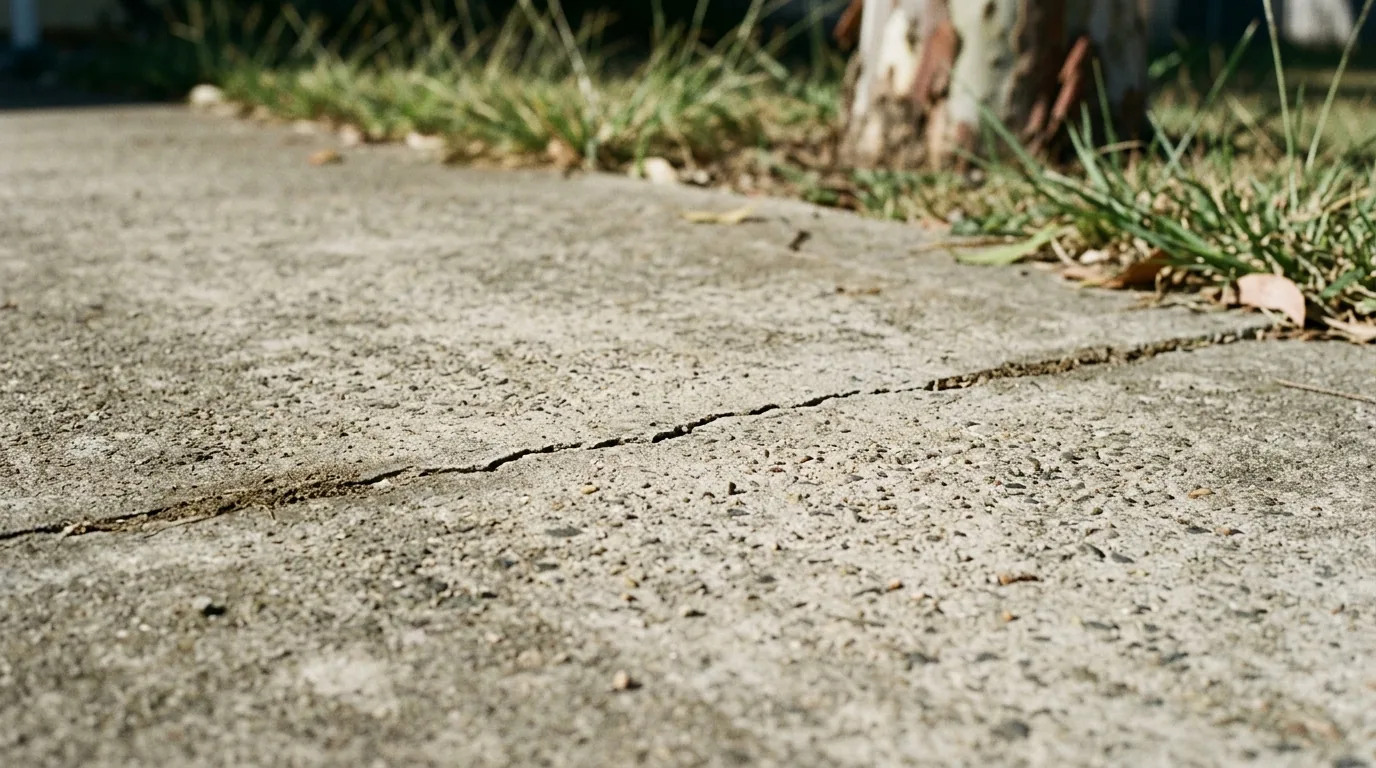
Noticed cracks in your concrete driveway, slab or path and wondering if it’s a disaster or nothing to worry about? You’re not alone — “why is my concrete cracking?” is one of the most common questions we hear in Rockhampton. The honest truth is that almost all concrete cracks a little, and most cracks are harmless. The trick is knowing which ones are cosmetic and which are warning signs.
Here’s a plain-English guide to what causes concrete to crack, which cracks matter, and what to do about them.
First: a little cracking is normal
Concrete shrinks slightly as it cures and moves with temperature changes — especially in Central Queensland’s heat. This is why good slabs have control joints (those deliberate grooves) cut into them: they give the concrete a planned place to crack neatly instead of randomly. A thin crack along a joint is the system working as designed.
What you’re checking for is whether a crack is cosmetic or structural.
Types of cracks
Hairline and shrinkage cracks (usually cosmetic)
- Very thin, often less than the width of a coin’s edge
- Shallow, on the surface
- Random “map” patterns (crazing) or short lines
- Both sides of the crack stay level
These are normal, rarely affect strength, and are mostly a cosmetic concern.
Structural cracks (take these seriously)
- Wide enough to fit a coin or a fingernail deep into
- Run right through the slab
- One side sits higher than the other (stepping)
- Keep growing over weeks or months
- Run across the whole slab, ignoring the control joints
These point to a problem under the slab and need a professional look.
What actually causes concrete to crack
1. Poor base preparation
The number-one cause. If the ground underneath wasn’t excavated, built up with road base and properly compacted, the slab has nothing solid to sit on. It settles unevenly and cracks. You never see the base, but it makes or breaks the slab.
2. No or too few control joints
Without joints to control where shrinkage happens, concrete cracks wherever it likes — often in long, ugly lines across the slab.
3. Wrong thickness or reinforcement
A driveway poured too thin, or without proper steel mesh, can’t handle vehicle loads and cracks under the weight. Boats, caravans and heavy vehicles need extra thickness.
4. Reactive CQ soils
Many Central Queensland blocks have clay soils that swell when wet and shrink when dry. This constant movement under the slab — heaving in the wet, dropping in the dry — is a major local cause of structural cracking when the base and slab aren’t designed for it.
5. Drying too fast in the heat
Concrete poured on a stinking-hot CQ day that isn’t cured properly (kept damp as it sets) loses water too quickly and develops surface cracks. Good crews plan the pour and cure around our weather.
6. Tree roots and ground movement
Roots growing under a slab, or erosion from poor drainage washing the base away, both lead to cracking over time.
Which cracks are cosmetic vs serious?
| Crack sign | Likely cosmetic | Likely serious |
|---|---|---|
| Hairline width | ✔ | |
| Wide / deep enough for a coin | ✔ | |
| Sits flat, both sides level | ✔ | |
| Stepped (one side higher) | ✔ | |
| Follows a control joint | ✔ | |
| Crosses whole slab, ignores joints | ✔ | |
| Stable over time | ✔ | |
| Growing month to month | ✔ |
How to fix and prevent cracks
Cosmetic cracks: These can often be filled, sealed and tidied up. If the surface is generally worn or you want a fresh look, resurfacing bonds a new layer over the top and hides hairline cracks while upgrading the finish. A good seal also helps protect against water getting into minor cracks.
Structural cracks: These mean the foundation is moving, and a coating alone won’t fix that. Depending on severity, the fix ranges from underpinning and repair to removing and re-pouring the affected slab over a corrected base.
Preventing cracks on a new pour comes down to doing the basics right:
- Proper excavation and well-compacted road base
- Correct slab thickness and steel reinforcement for the load
- Control joints cut at the right spacing
- A slab designed for reactive soils where needed
- Careful curing so it doesn’t dry too fast in the heat
Get these right and your concrete should give you decades of trouble-free service.
When to call a pro
Call in an experienced concreter if a crack is wide, deep, stepped, growing, or letting water pool. Those are the signs of movement underneath, and the sooner it’s assessed the cheaper the fix usually is. Hairline cracks that sit flat and stable can generally wait.
We’re happy to take a look, tell you straight whether a crack is cosmetic or serious, and only recommend work that’s genuinely needed — even if that’s just a seal.
Worried about a crack in your driveway or slab? Get a free quote and we’ll assess it honestly for you.