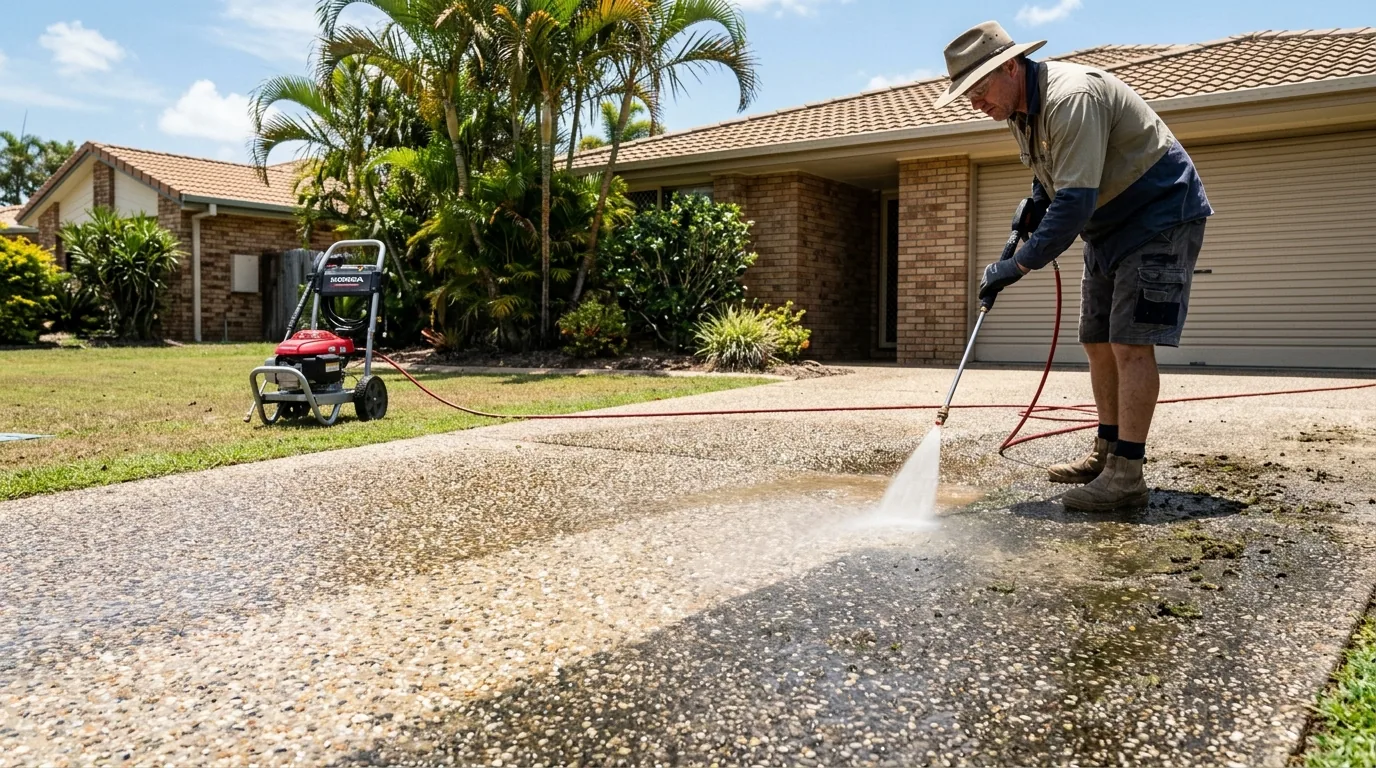
Exposed aggregate is one of the toughest, best-looking finishes you can put down in Central Queensland — but like any outdoor surface, it stays looking its best with a bit of regular care. The good news is that cleaning exposed aggregate concrete is genuinely simple once you know what to use and, just as importantly, what to avoid.
This guide walks through how to clean exposed aggregate concrete the right way for our CQ climate, from a quick weekly hose-down to shifting stubborn oil, mould and leaf stains, plus when it’s time to reseal.
Routine cleaning: keep it simple
Most of the work is just stopping dirt and organic matter from building up in the first place. A regular routine does 90% of the job:
- Sweep weekly with a stiff outdoor broom to clear leaves, dirt and grit before they stain.
- Hose it down every week or two to flush dust and pollen out of the textured surface.
- Do a deeper clean a couple of times a year with warm water, a soft-bristle broom and a small amount of pH-neutral cleaner or mild dishwashing liquid.
That’s it for everyday care. The textured surface of exposed aggregate hides marks well, so staying on top of the basics keeps it looking sharp for years. If you want a refresher on why this finish is so popular here, our exposed aggregate page runs through it.
Removing the common CQ stains
Oil and grease
Car oil, BBQ grease and the like are the most common driveway and patio stains. Act fast:
- Soak up any fresh oil with cat litter, sawdust or a dry absorbent and leave it for a few hours.
- Sweep it up, then apply a dedicated concrete degreaser (or a paste of dishwashing liquid and warm water) to the stain.
- Scrub with a stiff (non-metal) brush, let it sit, then rinse thoroughly.
Older, set-in oil may need two or three passes. Patience beats harsh chemicals here.
Mould, algae and lichen
This is the big one in Central Queensland. Our humidity and wet-season downpours create the perfect conditions for green and black mould, especially on shaded or south-facing surfaces near Yeppoon, Emu Park and the Capricorn Coast. To shift it:
- Mix oxygen bleach (sodium percarbonate) with water, or use a purpose-made outdoor mould cleaner.
- Apply, let it dwell for 10–15 minutes, scrub, then rinse well.
- Avoid chlorine bleach where possible — it can affect the colour of the aggregate and surrounding plants.
Leaf and tannin stains
Leaves and gumnuts left sitting in the wet leach tannins that leave brown marks. Oxygen bleach works well on these too. The real fix is prevention: sweep leaves off before the next downpour traps them on the surface.
Pressure washing: dos and don’ts
A pressure washer is a great tool for exposed aggregate — but only if you respect the surface. Used carelessly, it can blast away the surface cement paste and even dislodge stones.
Do:
- Use a wide fan tip (25° or 40°), never a narrow pencil jet.
- Keep the nozzle at least 30cm from the surface.
- Keep the wand moving in smooth, overlapping passes.
- Work at a moderate pressure rather than maxing the machine out.
Don’t:
- Hold the jet in one spot or get too close — you’ll leave etch marks.
- Use a turbo/rotary nozzle directly on the aggregate.
- Pressure wash a surface that’s overdue for resealing and expect it to look the same afterwards.
If you’re unsure, test a small out-of-the-way corner first.
Products to avoid
Some cleaners do more harm than good on decorative concrete:
- Acid-based cleaners (hydrochloric/muriatic acid) — these eat into the cement paste, dull the finish and can expose more stone than intended.
- Harsh metal brushes and wire wool — they scratch and can leave rust marks.
- Undiluted chlorine bleach — risks discolouration and harms nearby gardens.
- Cheap “all-purpose” solvents — many strip sealer along with the stain.
When in doubt, pH-neutral is the safe choice.
When and why to reseal after cleaning
Here’s the part people miss. A good clean often strips away some of the protective sealer — and in our harsh CQ sun and wet season, that sealer is what keeps stains out, colour rich and the surface bound together.
Signs it’s time to reseal:
- Water no longer beads on the surface and soaks straight in.
- The aggregate looks dull, faded or “dry” even when clean.
- It’s been roughly 2–4 years since the last seal (CQ UV is brutal, so resealing tends to be needed more often than in cooler states).
Resealing after a thorough clean is the best time to do it — you lock in a fresh, clean surface and restore that wet-look sheen. Our concrete sealing page explains the options and how often it pays to reseal in this climate.
Keep it looking its best
Cleaning exposed aggregate isn’t hard — sweep often, hose regularly, treat stains promptly, go gentle with the pressure washer, and reseal every few years. Do that and your driveway or patio will look great for decades.
If your exposed aggregate is looking tired, the sealer’s worn off, or you’d like a hand bringing it back to life, we’re happy to take a look. Get in touch for a free quote and we’ll sort out the right clean-and-reseal plan for your surface.